ART TRACKERSConnecting fine art to people
Platform OverviewPlatform SecurityPricingTechnology OverviewTags & PlaquesWhat is UAINLegal & Compliance
GovernmentTribal NationsArtistsUniversity & CollegesServicesProcurement
InstitutionsExploreMuseum Collections
Artists
Why Art TrackersAboutContactBlogDocumentationCareers
Request demo
Platform OverviewPlatform SecurityPricingTechnology OverviewTags & PlaquesWhat is UAINLegal & Compliance
GovernmentTribal NationsArtistsUniversity & CollegesServicesProcurement
InstitutionsExploreMuseum Collections
Artists
Why Art TrackersAboutContactBlogDocumentationCareers
Request demo
Art Trackers logo
ART TRACKERS
Connecting fine art to people

Connecting fine art to people. Preserving cultural legacy through technology.

Platform

FeaturesHow It WorksSecurityIntegrations

Government

For Cities & CountiesCompliance

Resources

DocumentationHelp CenterBlog

Company

About UsCareersNewsContact Us

© 2026 Art Trackers LLC. All rights reserved.

Privacy PolicyTerms of ServiceAccessibility
    Museum collections / The Cleveland Museum of Art
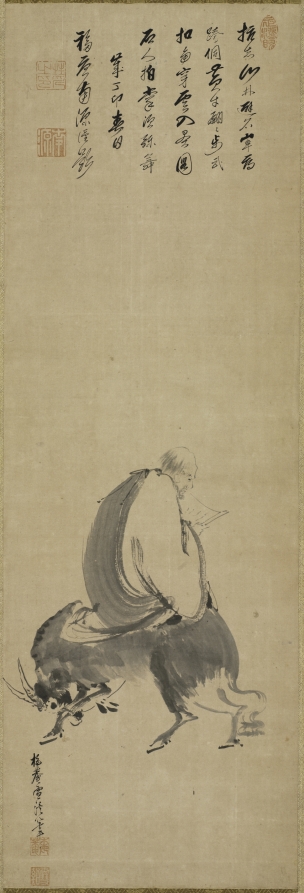
    Weizheng Riding on an Ox by Yamaguchi Sekkei
    Yamaguchi Sekkei. Weizheng Riding on an Ox, 1687. The Cleveland Museum of Art. Public domain (CC0).
    AT-00009757

    Public data from the Cleveland Museum of Art. Learn more

    Weizheng Riding on an Ox

    by Yamaguchi Sekkei

    Also known as: Man Riding Backwards on a Water Buffalo

    About the Artwork

    The inscription at the top of this painting was brushed by Ōbaku school monk Nanyuan Xingpai (Japanese: Nangen Shōha), a Chinese Buddhist monk who emigrated to Japan in 1654, while the painting was done in ink by Yamaguchi Sekkei, a Japanese painter active in Kyoto who was known for his Buddhist subjects, many of which remain in temples today. The figure here reads a text while riding backward upon a water buffalo. Sekkei's painting depicts the Chinese monk Weizheng (986–1049), also known as "Zheng of the Yellow Ox" after his favored mount. Nanyuan's inscription is a poem about the monk.

    Inscriptions

    関房印 正法(灋)眼/抗志山林邂名宰蒋/ 跨個黃牛翩翩步武/ 扣角穿雲入聖圖/ 石人拍掌須彌舞/ 筆丁卯春日/ 福唐南源 謹題/ 印(上)性派之印/ 印(下)南源/ 款記 梅庵雪渓筆/ 落款印(上)梅庵(下)雪渓

    Exhibition history

    Suibokuga: Japanese Ink Painting. The Cleveland Museum of Art, Cleveland, OH (organizer) (October 1, 1985-February 24, 1986). Byobu: The Art of the Japanese Screen. The Cleveland Museum of Art, Cleveland, OH (organizer) (December 8, 1987-January 10, 1988).

    Quick Overview

    Artist
    Yamaguchi Sekkei (Japanese, 1644–1732)
    Date
    1687
    Medium
    hanging scroll; ink on paper
    Dimensions
    Painting: 116.5 x 39 cm (45 7/8 x 15 3/8 in.); Mounted: 201.3 x 55.9 cm (79 1/4 x 22 in.)
    Type
    Painting
    Classification
    Painting
    Department
    Japanese Art
    Credit line
    Gift of Nisaburo Mizutani
    Accession no.
    1973.86

    Provenance

    ?–1973: Nisaburo Mizutani, Kyoto, Japan, given to the Cleveland Museum of Art 1973–: The Cleveland Museum of Art, Cleveland, OH

    More by Yamaguchi Sekkei in museum collections

    • Eight Views of the Xiao and Xiang Rivers by Yamaguchi Sekkei

      Eight Views of the Xiao and Xiang Rivers

      Yamaguchi Sekkei

      Late 17th–early 18th century · Painting

      Museum collection · via the Art Institute of ChicagoAT-00000897
    • Eight Views of the Xiao and Xiang Rivers by Yamaguchi Sekkei

      Eight Views of the Xiao and Xiang Rivers

      Yamaguchi Sekkei

      Late 17th–early 18th century · Painting

      Museum collection · via the Art Institute of ChicagoAT-00000898
    • Eight Views of the Xiao and Xiang Rivers by Yamaguchi Sekkei

      Eight Views of the Xiao and Xiang Rivers

      Yamaguchi Sekkei

      Late 17th/early 18th century · Painting

      Museum collection · via the Art Institute of ChicagoAT-00001672
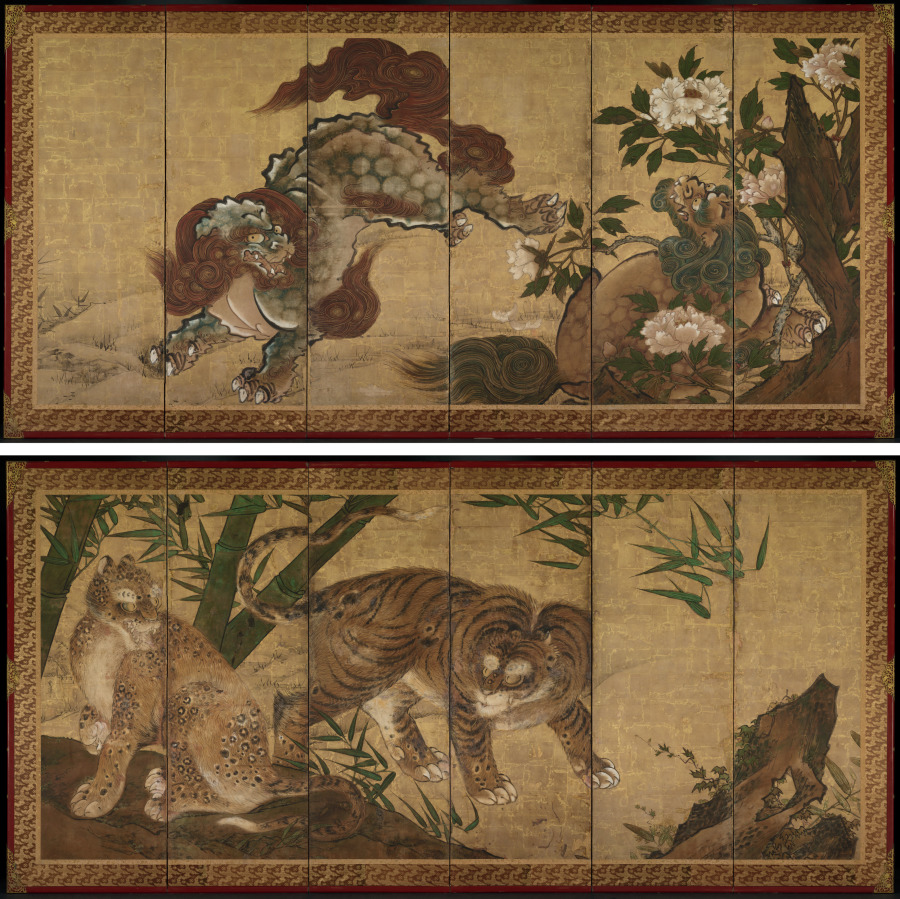
    • Lions and Tigers in Peony and Bamboo by Yamaguchi Sekkei

      Lions and Tigers in Peony and Bamboo

      Yamaguchi Sekkei

      1668 · Painting

      Museum collection · via the Cleveland Museum of ArtAT-00009925

    Open-access museum data

    This record comes from the open-access collection data that the Cleveland Museum of Art publishes for unrestricted use (Creative Commons Zero). Art Trackers shows a selection of the museum's published fields. The Cleveland Museum of Art is not an Art Trackers client and has not reviewed or endorsed this page; the museum's own website is the authoritative record.

    Source: The Cleveland Museum of Art Open Access (CC0)

    • View this work at the Cleveland Museum of Art
    • The Cleveland Museum of Art: open-access terms

    Data retrieved from the Cleveland Museum of Art on October 8, 2026. The museum may have updated its record since.

    Open-access museum record · AT-00009757

    Request removal·Powered by Art Trackers