ART TRACKERSConnecting fine art to people
Platform OverviewPlatform SecurityPricingTechnology OverviewTags & PlaquesWhat is UAINLegal & Compliance
GovernmentTribal NationsArtistsUniversity & CollegesServices
InstitutionsExploreMuseum Collections
Artists
Why Art TrackersAboutContactBlogDocumentationCareers
Request demo
Platform OverviewPlatform SecurityPricingTechnology OverviewTags & PlaquesWhat is UAINLegal & Compliance
GovernmentTribal NationsArtistsUniversity & CollegesServices
InstitutionsExploreMuseum Collections
Artists
Why Art TrackersAboutContactBlogDocumentationCareers
Request demo
Art Trackers logo
ART TRACKERS
Connecting fine art to people

Connecting fine art to people. Preserving cultural legacy through technology.

Platform

FeaturesHow It WorksSecurityIntegrations

Government

For Cities & CountiesComplianceResourcesCase Studies

Resources

DocumentationHelp CenterBlog

Company

About UsCareersNewsContact Us

© 2026 Art Trackers LLC. All rights reserved.

Privacy PolicyTerms of ServiceAccessibility
    Museum collections / The Cleveland Museum of Art
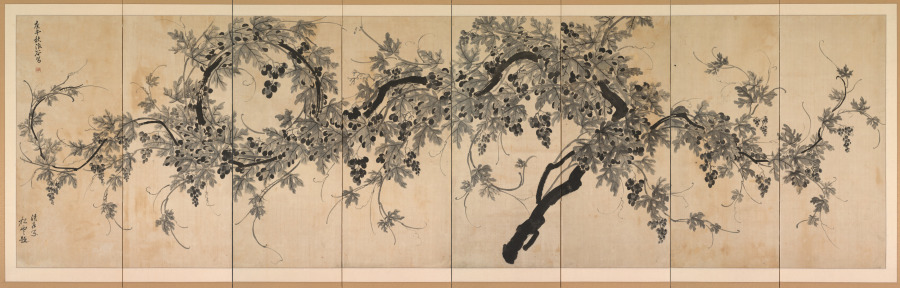
    Grapevine
    Choe Seok-hwan. Grapevine, early 1800s. The Cleveland Museum of Art. Public domain (CC0).

    Public collection via the Cleveland Museum of Art

    AT-00009811

    Grapevine

    by Choe Seok-hwan

    View at the Cleveland Museum of Art

    About the Artwork

    July is the season of the ripening deep blue grapes, and also the month when the monsoon season begins in Korea. To the accompaniment of stormy summer wind, grape vines make a spectacular full circle across the surface of this eight-panel folding screen. The artist employed a variety of ink tones to create a sense of swift movement of grapevines amid turbulent storms. Since their first introduction to the Korean peninsula around the 7th century through the Silk Road, grapes were used as artistic motifs. Artists embellished the surface of mother-of-pearl lacquer boxes or blue-and-white porcelain, while scholar-poets composed poems about the luscious sweet sourness of green grapes. By the late 19th century, grapes became the icon of fertility: the fruit grows in large clusters of many individual grapes, evoking the image of a stable clan with many descendants.

    Provenance

    ?–2015: George Gund III [1937–2013], bequest to the Cleveland Museum of Art 2015–: The Cleveland Museum of Art, Cleveland, OH

    Exhibition history

    Korean Gallery 236 Rotation. The Cleveland Museum of Art (organizer) (July 10, 2017-January 8, 2018).

    Open-access museum data

    This record comes from the open-access collection data that the Cleveland Museum of Art publishes for unrestricted use (Creative Commons Zero). Art Trackers shows a selection of the museum's published fields. The Cleveland Museum of Art is not an Art Trackers client and has not reviewed or endorsed this page; the museum's own website is the authoritative record.

    • View this work at the Cleveland Museum of Art
    • The Cleveland Museum of Art: open-access terms

    Data retrieved from the Cleveland Museum of Art on October 8, 2026. The museum may have updated its record since.

    Quick Overview

    Artist
    Choe Seok-hwan (Korean, active first half of 19th century)
    Date
    early 1800s
    Medium
    eight-panel folding screen; ink on paper
    Dimensions
    Image: 100.5 x 345 cm (39 9/16 x 135 13/16 in.)
    Type
    Painting
    Classification
    Painting
    Department
    Korean Art
    Credit line
    Gift from the Collection of George Gund III
    Accession no.
    2015.510

    Open-access museum record · AT-00009811

    Powered by Art Trackers