
Public data from the Cleveland Museum of Art. Learn more
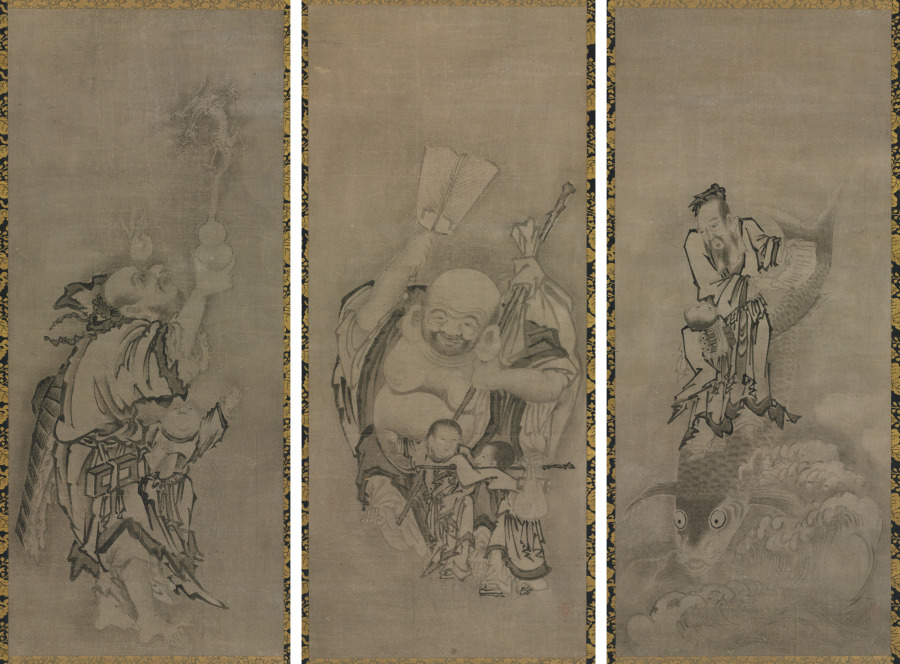
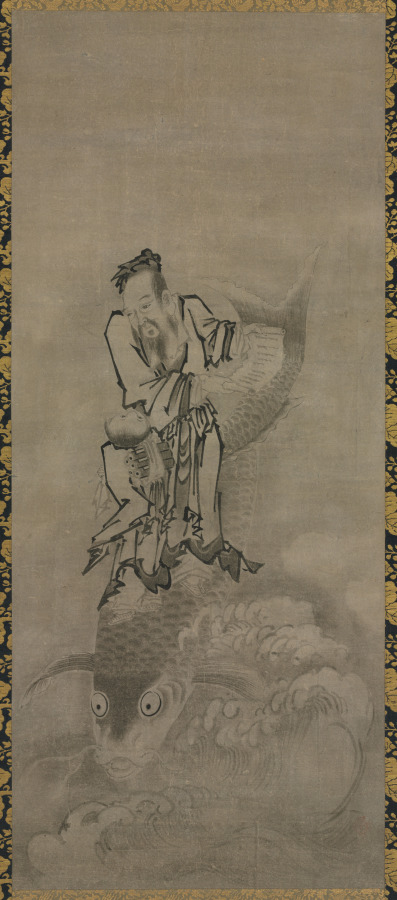
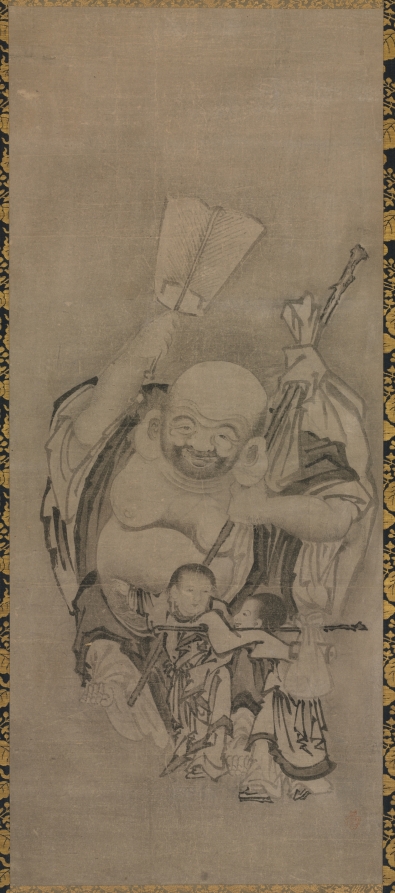
Hotei with Daoist Immortals
About the Artwork
Hotei was a Chan (Zen) monk living in China during the 900s who became a legendary figure in Japan in the 1300s. At that time a popular cult praising him sprang up, extending beyond Zen to other religious communities. This rare triptych embraces a central Zen icon with flanking Daoist images, thereby suggesting the compatibility, rather than the exclusivity, of these two creeds. Hotei also enjoys popularity in Japan as a kind of folk figure, which explains his mirthful expression in Japanese paintings. The Daoist figures in contrast appear eccentric and foreign, in keeping with Daoist lore. When these paintings came to the museum their appearance was compromised by poor quality textile mountings, and cracked paper surfaces needing restoration. Following the cleaning of the paper surfaces and the repair of the lifting surface areas, each scroll was completely remounted. No inpainting was done, thereby preserving the original ink values and brushstrokes.
Provenance
?–1989: (Eastern Fine Arts, New York, NY, sold to the Cleveland Museum of Art) 1989–: The Cleveland Museum of Art, Cleveland, OH
Exhibition history
The Year in Review for 1989. The Cleveland Museum of Art, Cleveland, OH (organizer) (February 6-April 15, 1990).
Quick Overview
- Artist
- Kyūseki Tomonobu (Japanese, 1653–1721)
- Date
- late 1600s–early 1700s
- Medium
- triptych of hanging scrolls: ink on paper
- Dimensions
- Overall: 210.2 x 68.6 cm (82 3/4 x 27 in.)
- Type
- Painting
- Classification
- Painting
- Department
- Japanese Art
- Credit line
- Mr. and Mrs. William H. Marlatt Fund
- Accession no.
- 1989.8
More by Kyūseki Tomonobu in museum collections
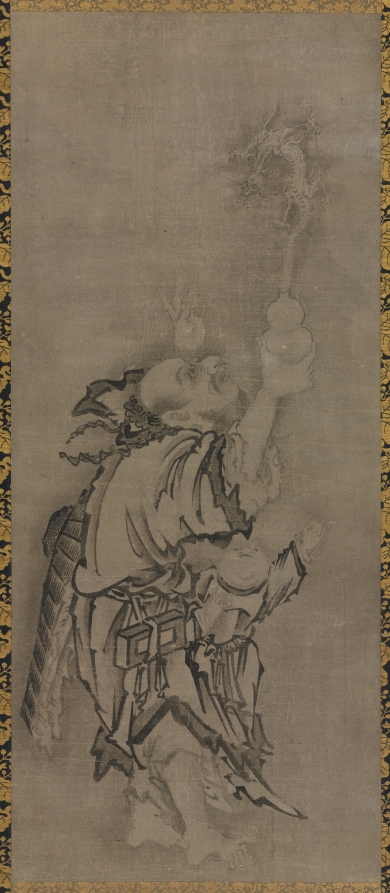
Hotei with Daoist Immortals: Immortal with Gourd and Dragon
Kyūseki Tomonobulate 1600s-early 1700s · Painting
Data retrieved from the Cleveland Museum of Art on October 8, 2026. The museum may have updated its record since.
Open-access museum record · AT-00010170
Powered by Art Trackers