ART TRACKERSConnecting fine art to people
Platform OverviewPlatform SecurityPricingTechnology OverviewTags & PlaquesWhat is UAINLegal & Compliance
GovernmentTribal NationsArtistsUniversity & CollegesServices
InstitutionsExploreMuseum Collections
Artists
Why Art TrackersAboutContactBlogDocumentationCareers
Request demo
Platform OverviewPlatform SecurityPricingTechnology OverviewTags & PlaquesWhat is UAINLegal & Compliance
GovernmentTribal NationsArtistsUniversity & CollegesServices
InstitutionsExploreMuseum Collections
Artists
Why Art TrackersAboutContactBlogDocumentationCareers
Request demo
Art Trackers logo
ART TRACKERS
Connecting fine art to people

Connecting fine art to people. Preserving cultural legacy through technology.

Platform

FeaturesHow It WorksSecurityIntegrations

Government

For Cities & CountiesComplianceResourcesCase Studies

Resources

DocumentationHelp CenterBlog

Company

About UsCareersNewsContact Us

© 2026 Art Trackers LLC. All rights reserved.

Privacy PolicyTerms of ServiceAccessibility
    Museum collections / The Cleveland Museum of Art
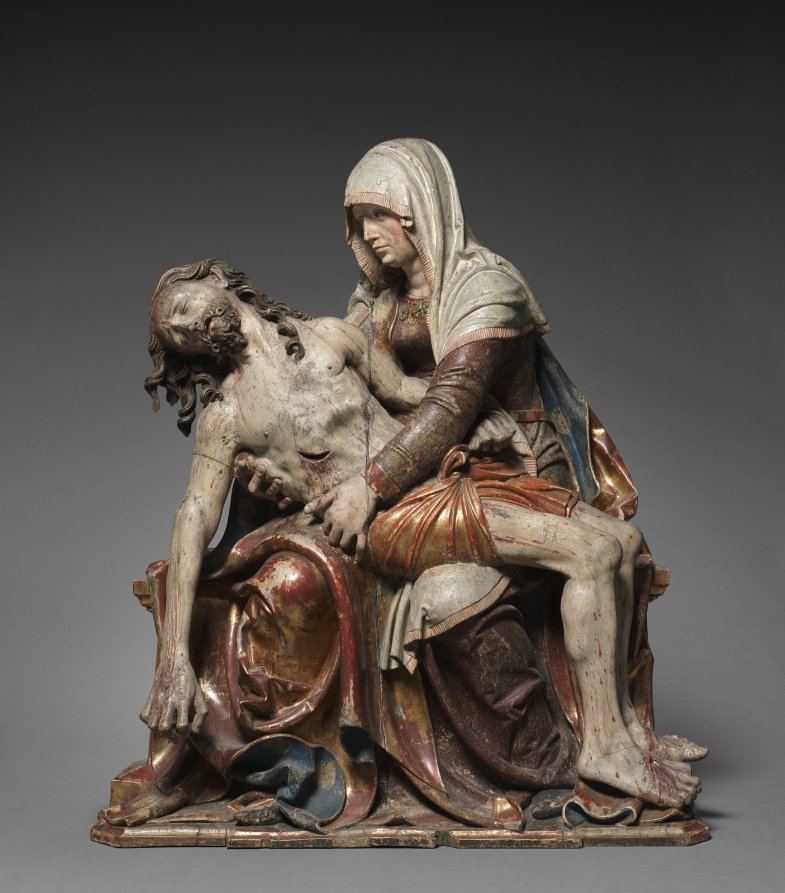
    Vesperbild (Pietà)
    Master of Rabenden. Vesperbild (Pietà), c. 1515–20. The Cleveland Museum of Art. Public domain (CC0).
    AT-00010653

    Public data from the Cleveland Museum of Art. Learn more

    Vesperbild (Pietà)

    by Master of Rabenden

    Also known as: Pietà

    About the Artwork

    Depicting the Virgin cradling Christ’s dead body, works like this one were known in German as vesperbilds, owing to their incorporation into the liturgy of the evening prayer (vespers) on Good Friday. The word pietà—from the Latin pietas, meaning "piety" or "compassion"—was also used to describe such works. Like other devotional image types that emerged in southern Germany in the later medieval period, vesperbilds encouraged viewers to contemplate Christ’s suffering and empathize with the Virgin’s sorrows more directly and emotively than ever before. This anonymous German artist is named after one of his most important works, the high altar of the church of Rabenden in the Chiemgau, the foothills of the Alps. The sculpture was likely placed in a secondary chapel in a Bavarian church.

    Provenance

    Georg Schuster Collection, Munich, Germany; (Julius Böhler, Munich, Germany).

    Exhibition history

    Sacred Gifts and Worldly Treasures: Medieval Masterworks from the Cleveland Museum of Art. J. Paul Getty Museum, Los Angeles, CA (October 30, 2007-January 20, 2008).

    Quick Overview

    Artist
    Master of Rabenden (German)
    Date
    c. 1515–20
    Medium
    lindenwood, polychromed and gilded
    Dimensions
    Overall: 89.1 x 78.7 x 32.4 cm (35 1/16 x 31 x 12 3/4 in.)
    Type
    Sculpture
    Classification
    Sculpture
    Department
    Medieval Art
    Credit line
    Purchase from the J. H. Wade Fund
    Accession no.
    1938.294

    Open-access museum data

    This record comes from the open-access collection data that the Cleveland Museum of Art publishes for unrestricted use (Creative Commons Zero). Art Trackers shows a selection of the museum's published fields. The Cleveland Museum of Art is not an Art Trackers client and has not reviewed or endorsed this page; the museum's own website is the authoritative record.

    • View this work at the Cleveland Museum of Art
    • The Cleveland Museum of Art: open-access terms

    Data retrieved from the Cleveland Museum of Art on October 8, 2026. The museum may have updated its record since.

    Open-access museum record · AT-00010653

    Powered by Art Trackers