
Public data from the Cleveland Museum of Art. Learn more
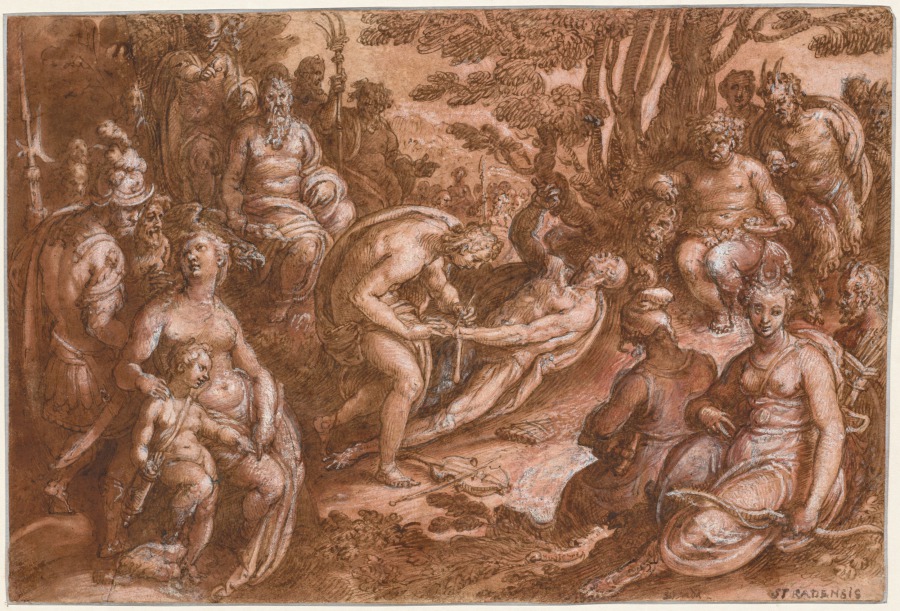
The Flaying of Marsyas
About the Artwork
In this gruesome mythological scene, Apollo begins to flay, or peel the skin off, the satyr Marsyas as punishment for his arrogant challenge in a musical contest. The surrounding Olympian gods show reactions ranging from horror to fascination. The artist Johannes Stradanus helped found the Accademia delle Arti del Disegno (Academy of the Arts of Drawing) in Florence in 1563, which instituted a course of training for artists that included observing a human dissection. In making this image, Stradanus very likely understood the flaying of Marsyas as a metaphor for the importance of dissection and anatomical study to the artist.
Inscriptions
Inscribed LR in pen and ink “Strada. / STRADENSIS”
Provenance
Didier Aaron et Cie, Paris, France June 4, 2018: the Cleveland Museum of Art, Cleveland, OH
Exhibition history
Master/Apprentice: Imitation and Inspiration in the Renaissance. The Cleveland Museum of Art, Cleveland, OH (organizer) (October 13, 2019-February 23, 2020).
Quick Overview
- Artist
- Jan van der Straet, called Johannes Stradanus (Netherlandish, active Italy, 1523–1605)
- Date
- c. 1570–1605
- Medium
- Pen and brown ink and brown and red washes, heightened with white paint (or gouache), on paper prepared with red washes
- Dimensions
- Sheet: 21.1 x 31.5 cm (8 5/16 x 12 3/8 in.)
- Type
- Drawing
- Classification
- Drawing
- Department
- Drawings
- Credit line
- Severance and Greta Millikin Purchase Fund
- Accession no.
- 2018.26
More by Jan van der Straet, called Johannes Stradanus in museum collections
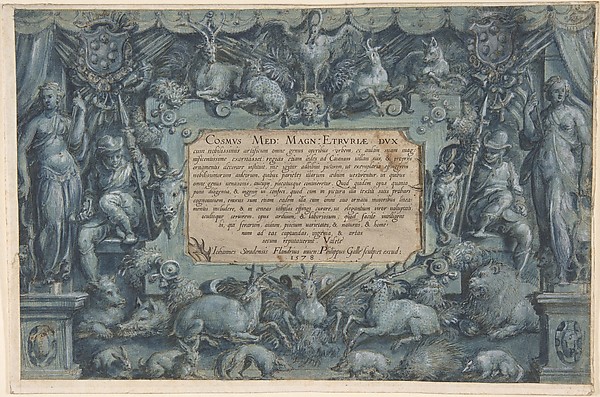
Design for a Frontispiece with the Medici Arms
Jan van der Straet, called Johannes Stradanus16th century · Drawing

Allegory of the Triumph of the Church
Jan van der Straet, called Johannes Stradanus16th century · Drawing
Data retrieved from the Cleveland Museum of Art on October 8, 2026. The museum may have updated its record since.
Open-access museum record · AT-00011574
Powered by Art Trackers