
Public collection via the Cleveland Museum of Art
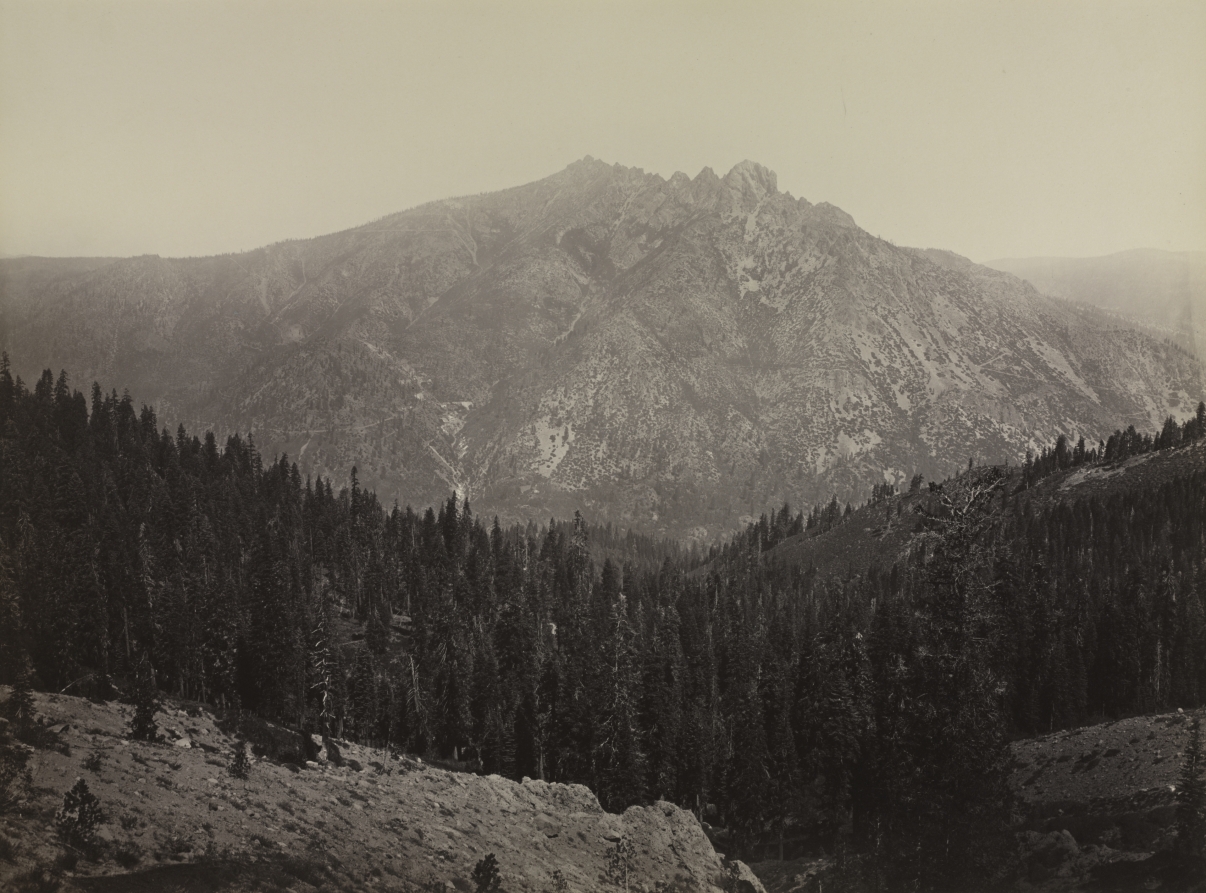
AT-00012977Davoncastle Butte, Sierra Nevada
About the Artwork
From the medium’s beginnings in the 1830s through the 1880s, most photographs were intimately scaled objects meant for the hand, the album, and the home. As the medium began being used to document landscapes and monuments in the 1850s, larger scale processes arose such as the glass-plate negative. The mammoth print truly seemed gargantuan in the 1860s. For much of the 20th century, the 8-x-10-inch gelatin silver print was the norm for photojournalism; these prints were destined for reproduction in books and magazines around the same scale.
Inscriptions
Written in pencil on verso: "CEN1900"; "9 [circled]"
Exhibition history
Pioneers of Landscape Photography from the Museum's Collection. The Cleveland Museum of Art, Cleveland, OH (organizer) (August 12, 2000-January 3, 2001). BIG: Photographs from the Collection. The Cleveland Museum of Art, Cleveland, OH (organizer) (June 12-October 9, 2016).
Data retrieved from the Cleveland Museum of Art on October 8, 2026. The museum may have updated its record since.
Quick Overview
- Artist
- Carleton E. Watkins (American, 1829–1916)
- Date
- c. 1866–1870
- Medium
- albumen print from wet collodion negative
- Dimensions
- Image: 40.5 x 54.8 cm (15 15/16 x 21 9/16 in.); Matted: 55.9 x 71.1 cm (22 x 28 in.)
- Type
- Photograph
- Classification
- Photograph
- Department
- Photography
- Credit line
- John L. Severance Fund
- Accession no.
- 1988.87
More by Carleton E. Watkins in museum collections
Public collection via the Cleveland Museum of Art
AT-00000339
Public collection via the Metropolitan Museum of Art
AT-00000526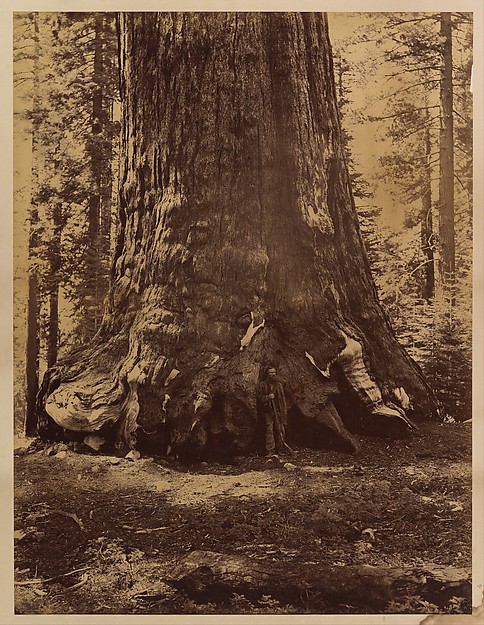
Section of the Grizzly Giant with Galen Clark, Mariposa Grove, Yosemite
Carleton E. Watkins1865–66 · Photograph
Public collection via the Metropolitan Museum of Art
AT-00000527
Public collection via the Metropolitan Museum of Art
AT-00000555
Open-access museum record · AT-00012977
Powered by Art Trackers