ART TRACKERSConnecting fine art to people
Platform OverviewPlatform SecurityPricingTechnology OverviewTags & PlaquesWhat is UAINLegal & Compliance
GovernmentTribal NationsArtistsUniversity & CollegesServicesProcurement
InstitutionsExploreMuseum Collections
Artists
Why Art TrackersAboutContactBlogDocumentationCareers
Request demo
Platform OverviewPlatform SecurityPricingTechnology OverviewTags & PlaquesWhat is UAINLegal & Compliance
GovernmentTribal NationsArtistsUniversity & CollegesServicesProcurement
InstitutionsExploreMuseum Collections
Artists
Why Art TrackersAboutContactBlogDocumentationCareers
Request demo
Art Trackers logo
ART TRACKERS
Connecting fine art to people

Connecting fine art to people. Preserving cultural legacy through technology.

Platform

FeaturesHow It WorksSecurityIntegrations

Government

For Cities & CountiesCompliance

Resources

DocumentationHelp CenterBlog

Company

About UsCareersNewsContact Us

© 2026 Art Trackers LLC. All rights reserved.

Privacy PolicyTerms of ServiceAccessibility
    Museum collections / The Cleveland Museum of Art
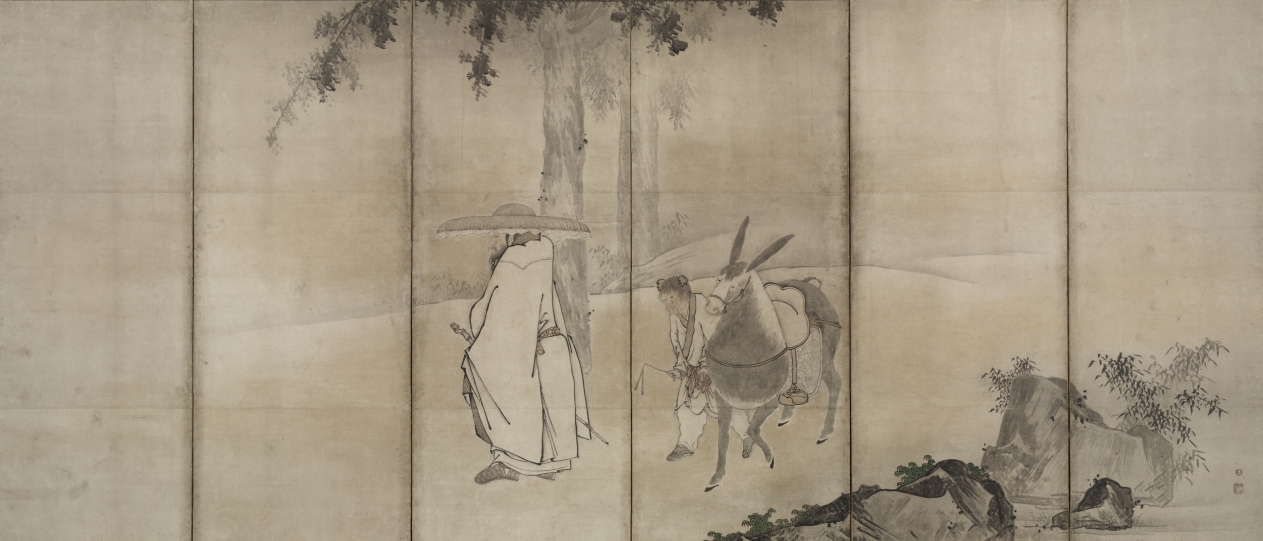
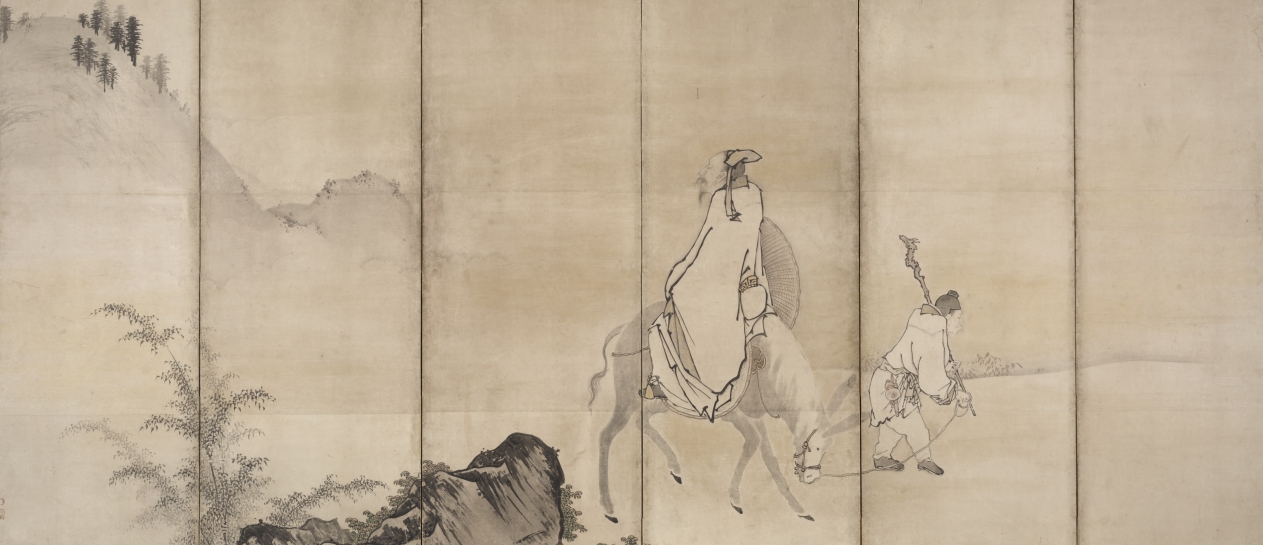
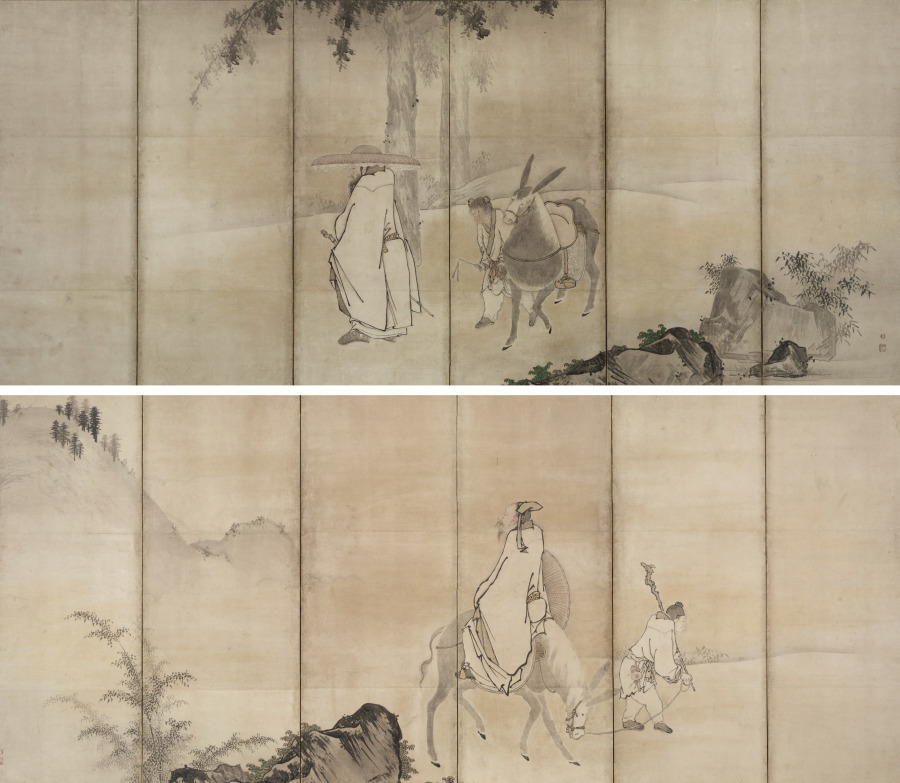
    Su Shi (So Shoku) and Pan Lang (Han Rō) by Unkoku Tōgan
    Unkoku Tōgan. Su Shi (So Shoku) and Pan Lang (Han Rō), early 1600s. The Cleveland Museum of Art. Public domain (CC0).
    AT-00010111

    Public data from the Cleveland Museum of Art. Learn more

    Su Shi (So Shoku) and Pan Lang (Han Rō)

    by Unkoku Tōgan

    Also known as: Su Shi and Pan Lang Folding Screens; Sotoba (Su Shi); Hanro (Pan Lang)

    About the Artwork

    This pair of screens depicts episodes from the stories of famed Song-dynasty poets Su Shi of the 1000s and Zhou-dynasty official Pan Lang of the 900s. Both men were banished by their rulers for their perceived missteps. Su Shi’s comments on a series of economic reforms were seen as criticism of the emperor. Pan Lang composed an ill-advised verse about one of the king’s horses. In the left screen Pan rides backward on his donkey as he returns from exile so that he may have a last look at his now beloved Mount Hua. Su Shi, in the right screen, is shown embarking on his journey into exile. The artist of these screens, Unkoku Tōgan, was the founder of the Unkoku school of painting, which emulated the style of renowned ink painter Sesshū Tōyō (1420–1506). Tōgan was the official painter of the Mori family of what is now Yamaguchi prefecture in the south of Japan.

    Exhibition history

    The Lure of Painted Poetry: Japanese and Korean Art. The Cleveland Museum of Art, Cleveland, OH (organizer) (April 15-August 21, 2011). Japanese Gallery 235 Rotation - January-July 2017. The Cleveland Museum of Art (January 9-July 10, 2017).

    Quick Overview

    Artist
    Unkoku Tōgan (Japanese, 1547–1618)
    Date
    early 1600s
    Medium
    pair of six-panel folding screens; ink, light color, and gold on paper
    Dimensions
    Overall: 172 x 374 cm (67 11/16 x 147 1/4 in.)
    Type
    Painting
    Classification
    Painting
    Department
    Japanese Art
    Credit line
    John L. Severance Fund
    Accession no.
    2006.135

    Provenance

    Mr. Shinkichiro Ishimitsu, Hagi City, Yamaguchi Prefecture; Mr. Mitsuru Tajima

    More by Unkoku Tōgan in museum collections

    • Poems and Pictures of the Eight Views of Xiao-Xiang by Unkoku Tōgan

      Poems and Pictures of the Eight Views of Xiao-Xiang

      Unkoku Tōgan

      1605–12 · Painting

      Museum collection · via the Cleveland Museum of ArtAT-00009749
    • Su Shi (So Shoku) by Unkoku Tōgan

      Su Shi (So Shoku)

      Unkoku Tōgan

      early 1600s · Painting

      Museum collection · via the Cleveland Museum of ArtAT-00010112
    • Pan Lang (Han Rō) by Unkoku Tōgan

      Pan Lang (Han Rō)

      Unkoku Tōgan

      early 1600s · Painting

      Museum collection · via the Cleveland Museum of ArtAT-00010113
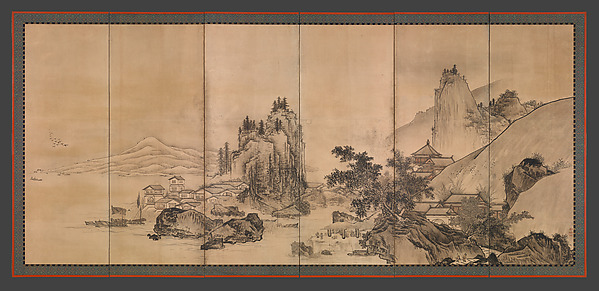
    • Landscape of the Four Seasons by Unkoku Tōgan

      Landscape of the Four Seasons

      Unkoku Tōgan

      late 16th–early 17th century · Painting

      Museum collection · via the Metropolitan Museum of ArtAT-00014398

    Open-access museum data

    This record comes from the open-access collection data that the Cleveland Museum of Art publishes for unrestricted use (Creative Commons Zero). Art Trackers shows a selection of the museum's published fields. The Cleveland Museum of Art is not an Art Trackers client and has not reviewed or endorsed this page; the museum's own website is the authoritative record.

    Source: The Cleveland Museum of Art Open Access (CC0)

    • View this work at the Cleveland Museum of Art
    • The Cleveland Museum of Art: open-access terms

    Data retrieved from the Cleveland Museum of Art on October 8, 2026. The museum may have updated its record since.

    Open-access museum record · AT-00010111

    Request removal·Powered by Art Trackers