

Why Art Trackers
There's Excel. There's legacy museum software. Then there's Art Trackers.
A factual, side-by-side look at what changes when your collection moves onto a purpose-built platform.

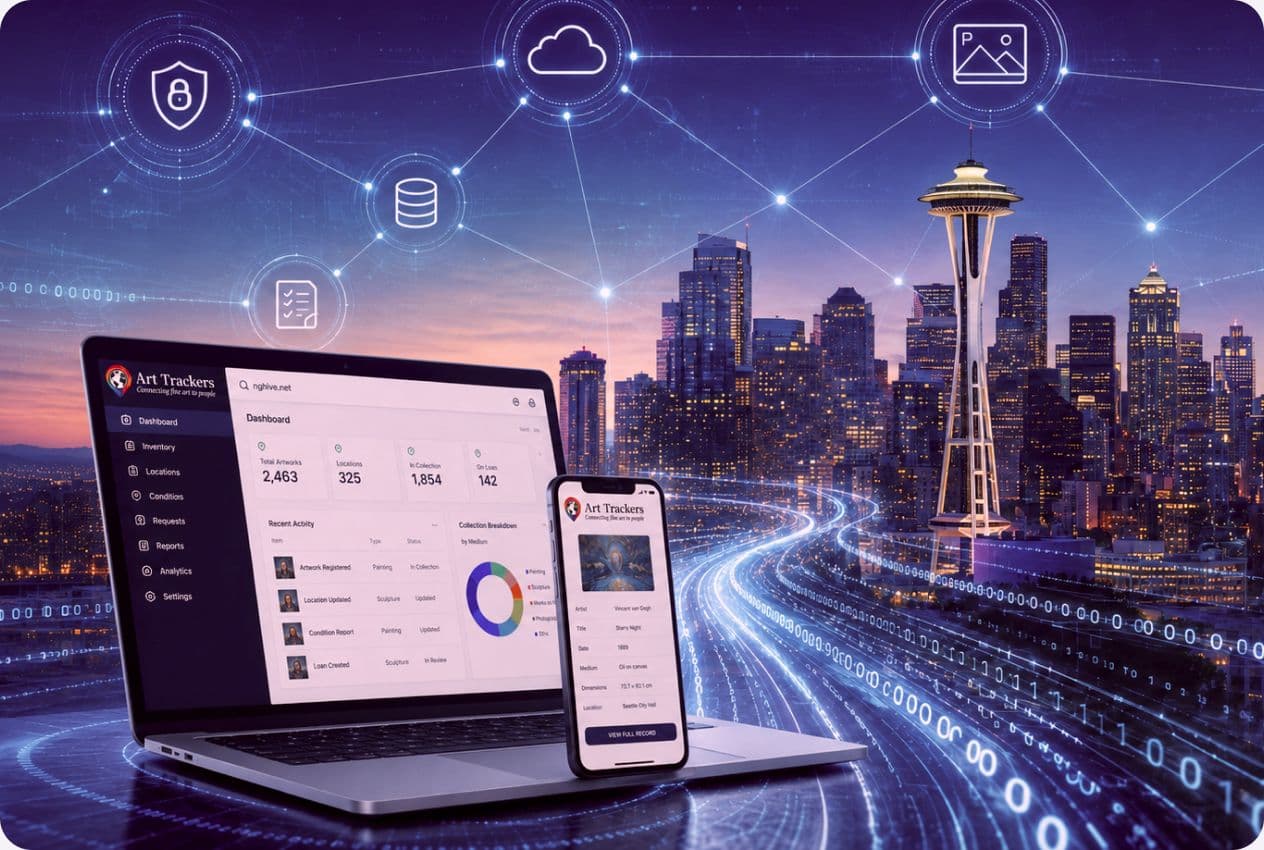
Why Art Trackers Exists
We didn't build another collection management system. We built the digital infrastructure public art has never had.
Art Trackers exists because every artwork deserves a permanent identity, every artist deserves lasting recognition, and every community deserves lasting access to its cultural legacy.
Comparison
25 capabilities. One clear difference.
Every row drawn from internal feature data — not estimated.


Cost of Spreadsheets
The hidden cost of spreadsheets
- Knowledge leaves with retiring staff; there's no record system, just memories.
- Records become inconsistent the moment more than one person maintains the file.
- Photos are stored in various places — a drive, email, or phone — and often end up lost.
- Grant reporting takes days of manual pulling and formatting instead of a single export.
- Public engagement is nearly impossible — a spreadsheet has no public-facing side at all.
- Provenance is difficult to verify years later, when the person who acquired the piece has moved on.
- Community members never discover the artwork in the first place — there's nothing for them to find.

Trusted To Manage
Built for the people who steward culture.
Cities
Municipal and county public art programs
Artists
Individual creators registering and growing their body of work
Universities
Campus public art and permanent collections
Museums
Collections and provenance infrastructure
Public art programs
Percent-for-art and civic commission programs
Tribal nations
Cultural collections and heritage stewardship
Cultural organizations
nonprofits and arts councils


After Installation
What happens after installation
- 1Artwork installed
- 2AT-ID Assigned
- 3NFC Tag installed
- 4Public profile created
- 5Community starts scanning
- 6Ownership recorded
- 7Conservation logged
- 8Legacy preserved


Metrics in Action
Art trackers links collections with people.
25+
Capabilities no spreadsheet has
14 days
Average time from contract to go-live
100%
Collection exported any time, no lock-in
∞
AT-ID is valid while artwork exists.


Comparison
How the public side
Traditional system
- 1Inventory
- 2Spreadsheet
- 3Storage
- 4Done


Art tracker's system
- 1Inventory
- 2Public map
- 3Artist profile
- 4Community engagement
- 5Analytics
- 6Permanent provenance
- 7Legacy


Timeline
Onboarding timeline
Days 1–3
Inventory Import
Your existing spreadsheet is migrated into the platform & every artwork gets its permanent AT-ID.
Days 4–7
Staff training
A live 90-minute training session for your team — no separate implementation project required.
Days 5–10
NFC tags delivered & installed
Tags arrive pre-programmed; your staff affixes them to each artwork.
Day 14
Go live
Public pages and the public art map go live. Direct support continues for 30 days.
Results
What changes when you switch.
- Less time preparing grant and compliance reports — one-click export instead of manual assembly.
- Faster public records responses — every artwork's full history is already structured and searchable.
- Fewer duplicate records since there's a single system of record instead of multiple spreadsheets.
- Improved documentation — condition history is permanently linked to each AT-ID, avoiding loss.
- Enhanced community engagement; scan analytics reveal if the public notices the collection.
- Improved artist recognition — artists see where their work lives and who's engaging with it.
- Better institutional continuity — records persist through staff changes, not just in one person's memory.

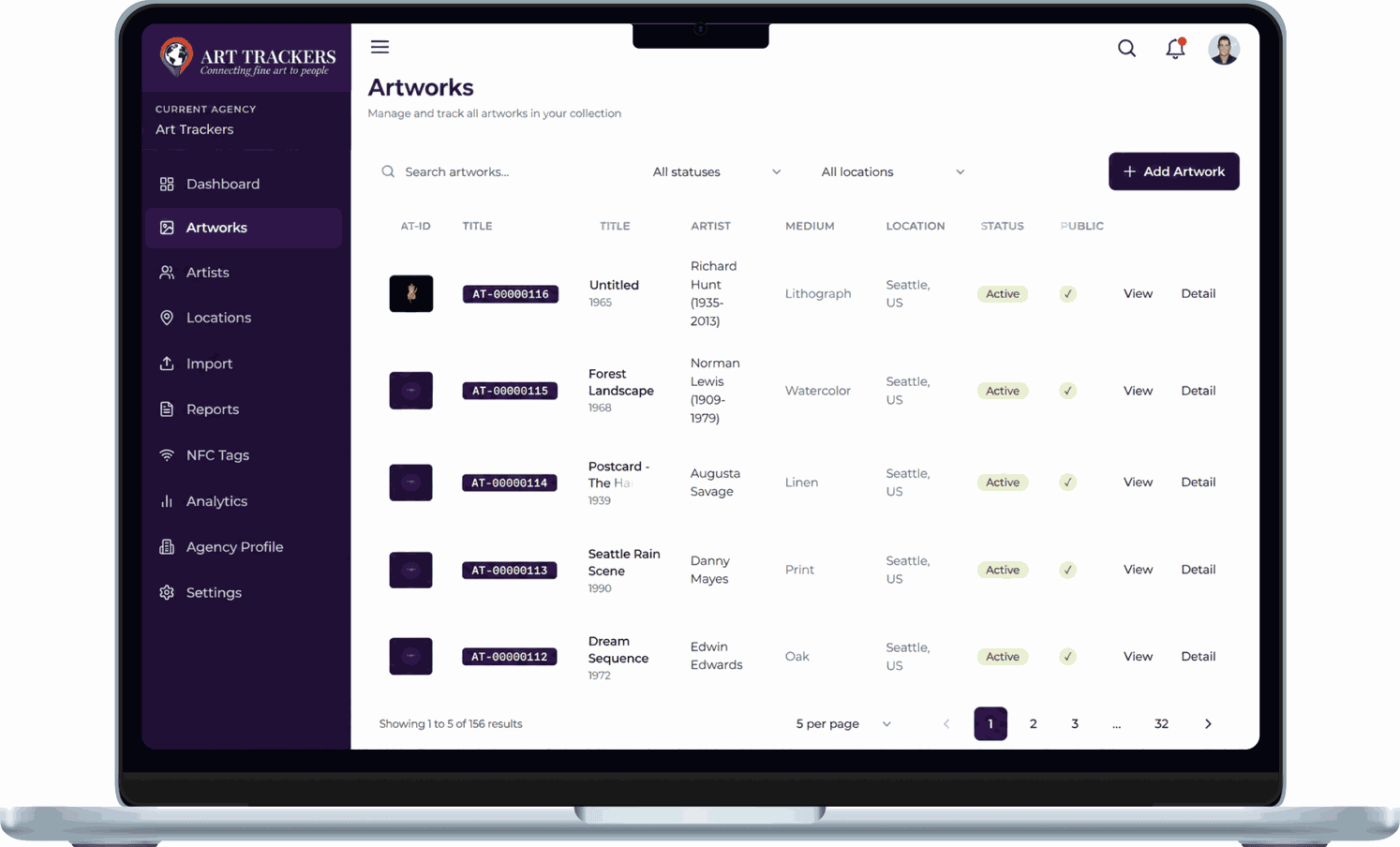
Price option
Procurement fit
$5,000–$10,000
/ 3–6 months
Fixed-price milestone engagement, up to 200 artworks.
$15,000
/year + $5,000 implementation
Unlimited artworks. Most agencies' best fit.


Every artwork has a story. Every artist leaves a legacy. Every community deserves to remember.
Art Trackers was built to make sure they do.